

Published by SCOJO New York on Sep 8, 2026
TR-90 Eyewear Material: Properties, Engineering Specs, and Durability Guide
For many individuals who rely on daily vision support, finding good reading glasses means navigating a frustrating cycle of bent frames, snapped temples, and painful nose-bridge fatigue. The root cause of this frequent frame failure lies not in how you wear them, but in the material limitations of conventional eyewear. Standard over-the-counter readers typically rely on rigid acrylics or brittle polystyrenes that lack tensile elasticity.
In 2026, advances in polymer engineering have shifted the optical industry standard toward TR-90, an advanced thermoplastic often referred to as "plastic titanium." By merging the structural strength and elastic recovery of metal alloys with the ultra-low density of high-performance polymers, TR-90 has revolutionized frame design.
This guide breaks down the molecular mechanics of TR-90, why it outperforms traditional plastics, and how it delivers a genuinely shatter-resistant, ultra-lightweight experience.
Quick Summary & Key Takeaways:
-
Definition: TR-90 is an amorphous thermoplastic copolyamide (Grilamid TR 90, PA MACM12) developed by Swiss manufacturer EMS-GRIVORY.
-
Shape Memory: Features >50% elongation-at-break and extreme torsional flexibility that snaps back without plastic deformation.
-
Ultra-Lightweight: Specific gravity of 1.00 g/cm³ makes frames 40%–60% lighter than acetate or metal alternatives (typically 8–15g per frame).
-
Impact & Thermal Resistance: Rated "No Break" under ISO 179 Charpy impact testing at -30°C; heat deflection temperature up to 135°C (HDT/B at 0.45 MPa).
-
Biocompatibility: Certified to ISO 10993 and USP Class VI, hypoallergenic and free from BPA and phthalates.
What is TR-90 Material?
TR-90 is an amorphous, transparent thermoplastic copolyamide engineered by the Swiss specialty chemical manufacturer EMS-GRIVORY. Formally designated under international standard ISO 1874 as PA MACM12 (GT,14-020), this cycloaliphatic block copolymer is globally commercialized under the brand name Grilamid TR 90.
Unlike traditional crystalline polyamides (nylons) that are naturally opaque, TR-90 achieves optical-grade transparency exceeding 90% luminous transmittance in its uncolored state. The optical industry nicknamed TR-90 "plastic titanium" because it combines the extreme tensile strength and shape-memory recovery of titanium alloys with the featherlight density of advanced polymers. When bent, twisted, or subjected to flexural strain, its cycloaliphatic molecular chains absorb the stress without developing micro-cracks, instantly recovering their original molded geometry upon release.
Why Traditional Readers Snap and Warp
Entry-level reading glasses are frequently engineered for low unit cost rather than longevity. These materials fail primarily due to three mechanical weaknesses:
-
Micro-Crystalline Stress Points: Cheap injection plastics (like styrene-acrylonitrile or non-annealed acrylic) possess an elongation-at-break of less than 5%. Repeatedly spreading the frame temples to put the glasses on induces micro-fissures at the hinge knuckles and bridge root, leading to sudden snapping, as noted in recent EZ Optical laboratory studies.
-
Low Impact Fracture in Cold Weather: In cold temperatures, cheap plastics undergo a ductile-to-brittle transition. A minor drop or accidental sit-down causes instant catastrophic shearing.
-
Thermal Creep and Warping: Basic cellulose acetate and standard plastics soften in warm environments. Leaving standard frames on a hot car dashboard (which can easily reach 60°C/140°F) causes the lens retention grooves to stretch, resulting in popped lenses and misaligned optical focal centers.
The Engineering Advantages of TR-90 Frames
TR-90 solves the structural failures of traditional plastics through several unique physical properties.
Extreme Torsional Elasticity and Impact Resistance
TR-90 exhibits an elongation-at-break exceeding 50%. In standardized Charpy notched impact tests (ISO 179), TR-90 registers a "No Break" rating—even at temperatures as low as -30°C. This means the frames absorb sudden kinetic shocks and flexural loads without developing notch sensitivity or structural cleavage. The temples can easily bend outward past 90 degrees to accommodate any head width without fracturing.
Superior Thermal and Chemical Stability
With a glass transition temperature (Tg) of 155°C (ISO 11357) and a heat deflection temperature of 135°C at 0.45 MPa (ISO 75), TR-90 frames maintain structural stability in extreme thermal environments that warp or degrade conventional plastics. Additionally, its cycloaliphatic backbone exhibits very low moisture absorption (1.5% at 23°C and 50% relative humidity, per ISO 62). This makes TR-90 highly resistant to human perspiration, cosmetic solvents, alcohol wipes, and UV photo-oxidation that routinely cause acetate frames to bleach, turn brittle, or delaminate.
Hypoallergenic Biocompatibility
High-grade TR-90 is biologically inert and free from phthalate plasticizers, bisphenols, and heavy metal stabilizers. Holding strict international certifications including ISO 10993 and USP Class VI biocompatibility, it eliminates the risk of contact dermatitis or skin irritation behind the ears, making it the ideal choice for wearers with sensitive skin.
Combating "Reader Fatigue" with Featherlight Ergonomics
Standard readers average between 25 to 40 grams in weight. Over a few hours, this weight concentrates pressure on the nasal bone and mastoid area behind the ears, creating painful red indentations and tension headaches commonly known as "reader fatigue."
Because TR-90 has an ultra-low specific gravity of 1.00 g/cm³, a complete TR-90 frame typically weighs between 8 and 15 grams—roughly 40% to 60% lighter than traditional acetate or metal frames. Combined with the polymer’s gentle lateral clamping force, the material distributes weight evenly across the facial contour for a "barely-there" sensation during prolonged desktop work.
Integrating TR-90: The Benchmark for the Best Reading Glasses
When seeking the best reading glasses on the market, consumers and optometrists look to brands that utilize pure, surgical-grade TR-90 rather than diluted plastic blends. SCOJO New York has established itself as an industry leader in this category, transforming reading eyewear from disposable commodities into durable, optical-grade instruments.
Through the SCOJO Gels Reading Glasses Collection, the brand leverages TR-90 memory polymer to deliver premium, ultra-lightweight frames backed by a 12-month manufacturer defect warranty.
-
Iconic Rimless Silhouettes: The bestselling Gels Original uses TR-90 componentry to achieve a weightless feel that flexes to fit any face shape securely.
-
Architectural Durability: Full-frame models like the Gels Manhattan and the Gels Slim Rectangle pair modern NYC styling with the flexural durability of shape-memory polymers.
-
Digital Eye Protection: For professionals requiring all-day screen protection, the SCOJO Gels BluLite Collection integrates distortion-free blue-light filtering lenses directly into featherlight TR-90 frames (such as the Bookman model).
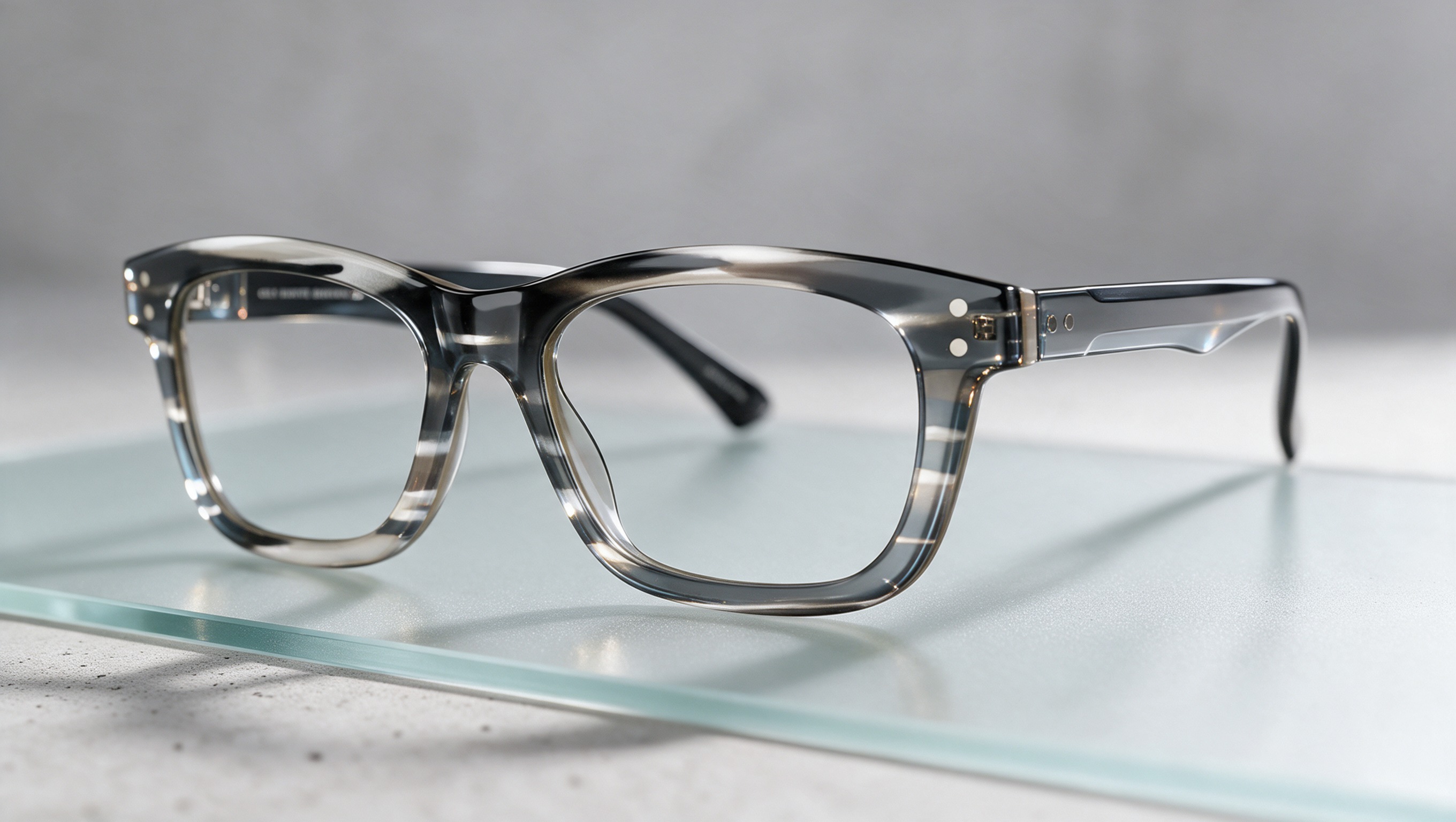
Frame Materials Compared
To understand why TR-90 is the superior choice for daily wear, compare its laboratory data against traditional optical materials:
|
Material Property / Standard |
TR-90 (Grilamid PA MACM12) |
Cellulose Acetate |
Standard Polycarbonate |
Titanium Alloy |
|---|---|---|---|---|
|
Density (ISO 1183) |
1.00 g/cm³ (Ultra-Light) |
1.28–1.32 g/cm³ |
1.20 g/cm³ |
4.50 g/cm³ |
|
Elongation at Break (ISO 527) |
> 50% (High Flexibility) |
15%–30% |
60%–100% |
10%–15% |
|
Flexural Memory & Recovery |
Dynamic Shape Memory |
Plastic (holds deformation) |
Rigid (prone to notch failure) |
Elastic (high spring rate) |
|
Impact at -30°C (ISO 179) |
No Break (Unnotched) |
Brittle Fracture |
Ductile / Moderate |
No Break |
|
Heat Deflection Temp (HDT) |
135°C (0.45 MPa) |
65°C–75°C (warps easily) |
125°C–135°C |
> 500°C |
|
Biocompatibility / Safety |
ISO 10993 / USP Class VI |
Hypoallergenic (core wires vary) |
BPA concerns in base resin |
Inert / Hypoallergenic |
(Note: Titanium relies on thin wire cross-sections to achieve lightness, whereas TR-90 delivers comparable lightweight comfort with wider, more ergonomic contact areas that reduce localized surface pressure on the skin). (Data via Opterio Clinical Guide and EMS-GRIVORY.)
Frequently Asked Questions About TR-90 Eyewear
What does TR-90 stand for?
TR-90 refers to Grilamid TR 90, a patented transparent cycloaliphatic copolyamide (PA MACM12) developed by Swiss polymer manufacturer EMS-GRIVORY. The "TR" stands for Transparent (amorphous polyamide), and "90" denotes its formulation grade.
Is TR-90 better than acetate for reading glasses?
Yes, for active and daily use. TR-90 is approximately 25% to 30% lighter than cellulose acetate, has built-in shape memory so it will not stretch or deform in heat, and will not dry out or whiten from skin oils and perspiration.
Can TR-90 frames break?
While no material is completely indestructible, TR-90 is virtually unbreakable under standard consumer use. It withstands outward temple bending beyond 90 degrees and holds a "No Break" rating under ISO 179 impact testing even at sub-zero temperatures (-30°C).
Are TR-90 glasses hypoallergenic?
Yes. TR-90 is biologically inert and certified under ISO 10993 and USP Class VI standards. It is free from BPA, phthalates, and nickel, making it safe for wearers with sensitive skin.
Conclusion
Investing in stylish reading glasses shouldn't mean sacrificing long-term durability or daily physical comfort. While cheap injection-molded plastics inevitably succumb to micro-fractures, temperature warping, and rapid wear, TR-90 'plastic titanium' offers a scientifically superior alternative. By providing medical-grade biocompatibility, extreme torsional memory, and a virtually weightless fit, TR-90 ensures your reading glasses remain as comfortable and structurally sound on day three hundred as they were on day one.